- A Comprehensive Guide to Cosmetic Stability Testing Guidelines
- Surfactant Analysis by HPLC: A Comprehensive Guide
- Italian Fake Olive Oil Flooded into the Market - 24 Suspects Were Arrested by the Police
- Active Pharmaceutical Ingredient Analysis
- US FDA Samples Harmful Viruses from Frozen Berries
- Canada Issued Food Safety Testing Bulletin

How to Perform Ultrasound Testing on Low-Alloyed Sheet Steel: A Step-by-Step Guide
InquiryThrough our global network of testing experts and analytical equipment including chromatography (HPLC, GC, GC/MS) and atomic absorption spectroscopy (AAS, GFA, FIAS), Our goal is to provide test services as efficiently as possible to maximize our customers' profits. For more information about our services, contact one of our experts today.
Note: this service is for Research Use Only and Not intended for clinical use.
What is Ultrasound Testing on Low-Alloyed Sheet Steel?
Ultrasonic Testing (UT) employs high-frequency sound waves within the 0.1 to 15 MHz spectrum to examine materials for internal defects and thickness measurement by evaluating wave propagation through the sample. This technology serves as a common method to inspect metals, alloys, and composite materials. The method proves effective in finding hidden defects within low-alloyed sheet steel including internal cracks and voids as well as inclusions that cannot be seen without technological aid.
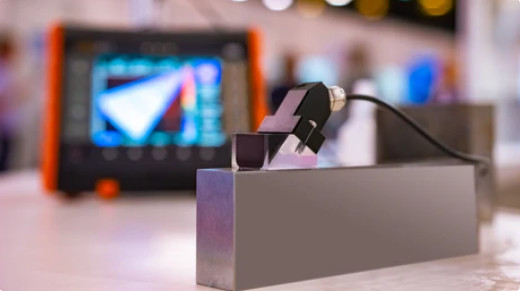
Construction, bridges and pressure vessels use low-alloyed sheet steel because it provides both high strength and excellent toughness. The manufacturing process can create defects like cracks and voids which endanger material performance and safety. As a non-destructive testing method ultrasonic testing allows for speedy and precise identification of material defects without damaging the steel thus enhancing its quality control.
Applications of Ultrasound Testing
The primary use of ultrasonic testing in low-alloyed sheet steel includes various applications such as thickness measurement and defect detection.
 Use of ultrasound to identify microstructure-property relationships in 316 stainless steel fabricated with binder jet additive manufacturing
Thickness Measurement
Sheet thickness assessment for standard compliance involves calculating thickness values based on the time measurement of sound wave travel through the material.
Defect Detection
Detection of internal defects including cracks, voids and inclusions allows for precise determination of their position and size which is essential for structural safety.
Quality Control
Continuous quality inspection processes in production lines confirm that every steel sheet batch fulfills quality standards.
Weld Quality Evaluation
Ultrasonic testing serves as a diagnostic method for evaluating the weld zone of welded low-alloyed sheet steel to detect lack of fusion and various welding defects including cracks.
For broader applications of this technique across different alloys, metals, and industrial scenarios, visit our Metallurgical Analysis Services page for detailed solutions.
How to Conduct the Ultrasound Testing Procedure
The following sections present both implementation steps and safety considerations for performing ultrasonic testing.
1. Preparation
All testing equipment must adhere to the established standards EN 583-1, EN 583-2, and EN 583-5.
Inspect the steel plate surface to verify it has no rust or other contaminating materials like oil and paint.
Set up a couplant substance such as water, oil, or glycerin to maintain proper contact between the probe and the steel surface.
2. Equipment Calibration
The calibration step is essential because it uses calibration blocks like Calibration Block 1 to fine-tune frequency and sensitivity settings as well as distance amplitude.
The calibration process requires positioning the probe vertically on the reference block then adjusting gain and sensitivity followed by recording values and repeating this process until an average is obtained.
Once the calibration process is complete perform an accuracy check on the time base and distance amplitude correction.
3. Probe Placement and Scanning
Position the probe on the steel plate surface while making sure no air gaps exist.
To achieve full contact at the interface apply couplant.
While scanning the edge of the plate move the probe so each scan overlaps at least 10% to achieve full coverage.
Make sure the inspection covers the complete volume by scanning in two perpendicular directions when needed.
4. Scanning Techniques and Methods
Select either straight or angled probes based on the specific needs of your inspection.
Detect defects by adjusting the gain to make signals visible and then document the defect details including position, shape, size, and type.
Assess material attenuation and identify defect characteristics by applying the AVG (Amplitude vs. Gain) curve method to analyze reflected signals.
5. Data Recording and Analysis
Document every piece of test data which covers the defect's position along with its depth and dimensions in terms of length and width.
Investigate defect features to understand how they affect structural safety before creating a testing report.
6. Safety Precautions
Utilize the necessary personal protective equipment such as gloves and safety goggles during testing.
The testing area must remain uncontaminated and interference-free while probes should not touch human skin or delicate regions.
Perform equipment maintenance and cleaning after conducting tests to maintain future reliability.
How to Interpret the Results of Ultrasound Testing
1. Understanding Data and Signals
1) Waveform Analysis
Interpreting reflected waveforms forms the basis of ultrasonic testing and they belong to two distinct categories.
- Static Waveforms: Static waveforms appear when the probe remains stationary because their patterns do not alter. The detection of planar defects such as inclusions and porosity involves these tools which usually display high and stable amplitude signals.
- Dynamic Waveforms: When the probe moves through the material the resulting waveforms change over time which allows detection of point defects like cracks as well as clusters. Amplitude changes reflect defect concentration and distribution.
2) Defect Localization and Quantification
Through ultrasonic testing technicians can determine defect locations and measure depths by analyzing the time delays of returning echoes. Quantitative analysis of defect size and severity becomes possible when defect echoes are measured against standard signals.
3) Instrument Parameter Settings
Fine-tune inspection sensitivity as well as time base and scanning speed to achieve clear signal detection while minimizing false readings. When inspecting thick plates you should decrease sensitivity settings to minimize interference from surface coupling.
2. Identifying Defects and Anomalies
1) Common Defect Types
- Planar Defects: Inclusions, porosity - usually high amplitude, fixed position.
- Point Defects: Cracks along with lack of fusion defects maintain a stable amplitude while their position varies depending on the probe movement.
- Undercuts and Lack of Fusion: Multi-peak reflections with high amplitude and irregular positions indicate undercuts and lack of fusion.
- False Defects: False defects originate from instrument noise or surface imperfections and can be resolved by changing sensitivity settings or adjusting probe placement.
2) Defect Grading and Evaluation
Results are generally divided into four levels based on defect traits and their severity.
- Level I: Material performance remains unaffected by either nonexistent or minimal defects.
- Level II: Defects of moderate severity can potentially impact performance which necessitates additional evaluation.
- Level III: Severe defects, requires immediate repair.
- Level IV: Critical defects, material is deemed unusable.
3) Defect Identification Tips
- To detect large defects in thick steel plates you should search for multiple reflection echoes.
- In weld inspections target multi-peak signals which suggest undercuts or areas lacking proper fusion.
3. Evaluating Material Structural Integrity
1) Structural Integrity Assessment
Ultrasonic testing serves dual roles by detecting material defects and evaluating structural soundness. For example:
- To assess weld quality you must inspect both uniformity and continuity of the weld.
- Ultrasonic testing should be used to find cracks and voids in concrete structures such as bridges and tunnels.
2) Data Recording and Reporting
Once testing is complete document the defect locations along with their types and sizes and distribution patterns. Create a defect distribution map. The operator must sign these records which will be used as references for performing repairs or making decisions.
3) Optimizing Production and Quality Control
Production lines use ultrasonic testing to monitor the quality of steel sheets during real-time operations. Defect images provide valuable insights into the root causes of production problems which lead to precise corrective actions.
Reference
- Huang, N., et al. "Use of ultrasound to identify microstructure-property relationships in 316 stainless steel fabricated with binder jet additive manufacturing." Additive Manufacturing 51 (2022): 102591.

Alfa Chemistry is a professional analytical testing company, and has long been committed to promoting the long-term development of the analytical testing industry. We sincerely welcome colleagues from all walks of life to come to negotiate and cooperate.
Do not know how to place an order, please refer to the flow chart shown below.
Submit quotation request |
A technical manager will contact you within 24 hours |
You will review and approve the final price and place an order |
Confirm with you and make the payment |
Instruct you to ship your samples and form |
Analytic report delivery |
Online Inquiry
X
KEEP UP TO DATE
Subscribe to our newsletter and follow us on social media
