Skincare Brand Startup
August 25, 2026

Through our global network of testing experts and analytical equipment including chromatography (HPLC, GC, GC/MS) and atomic absorption spectroscopy (AAS, GFA, FIAS), Our goal is to provide test services as efficiently as possible to maximize our customers' profits. For more information about our services, contact one of our experts today.
Note: this service is for Research Use Only and Not intended for clinical use.
 The face care products that can clean, beautify and change the appearance of our face need more attention in terms of the quality, safety and performance. Different face skin care products have different functions, such as basic moisturizing, anti-wrinkle, anti-aging, acne, blemishes and so on. Since skin care products come directly into contact with our skin, regulatory restrictions on facial care products are becoming more and more demanding. Testing of related products can check or reduce the risk of the product to ensure products' safety. As an experienced testing company, Alfa Chemistry is well versed in the global regulations and guidance of face care products, equipped with professional testing equipment to provide clients with one-stop analysis services according to the different testing methods specified by ASTM, FDA, EPA, BP, etc., to check your products for compliance with applicable regulations, including hazardous substances, prohibited ingredients, environmental standards, etc.
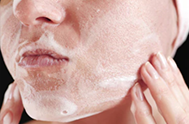 | CleansingMake-up remover, facial cleanser, scrub, cleansing mask, exfoliating cream, etc. |
 | Skin careEye cream, moisturizer, facial mask, lotion, essence, lotion, sunscreen, etc. |
 | Cosmeceutical, therapeutic classFreckle cream, acne cream, scar removal, anti-aging, etc. |
 | MakeupLipstick, eyelash growth solution, base cream, etc. |
Allergens Analysis
Raw Material QC testing
Contaminant Analysis
Color Additive Testing
Microbiological Testing
Heavy Metals Testing
Labling Analysis
As a reliable third-party testing company, Alfa Chemistry provides Personal Care & Beauty Products testing services to clients around the world to ensure the quality and safety of your products. With a professional analysis team and advanced instruments, we provide you with the most accurate testing results in the shortest time possible. To learn more about our services, please feel free to request a quote or consult our experienced scientists.
Viscometer
Used to measure the viscosity of skincare products, assessing their texture and flowability.
High-Performance Liquid Chromatograph (HPLC)
Used for detecting active ingredients, preservatives, and heavy metal content in skincare products.
Gas Chromatograph
Used for detecting volatile components and organic solvent residues in skincare products.
Atomic Absorption Spectrometer
Used for detecting heavy metal content, such as lead, mercury, arsenic, etc.
UV-Vis Spectrophotometer
Used for component analysis and physicochemical property testing.
Thermogravimetric Analyzer
Used to evaluate the thermal stability of skincare products.
Fourier Transform Infrared Spectrometer (FTIR)
Used to analyze the chemical structure and composition of skincare products.
Particle Size Analyzer
Used to measure the particle size distribution in emulsions or suspensions.

 Rodas, Melisa, et al. Talanta 143 (2015): 254-262.
Parabens, commonly used as preservatives in cosmetics and personal care products, have raised concerns due to potential health risks. Accurate detection of these compounds is crucial for ensuring product safety and regulatory compliance. This study introduces a novel multi-syringe chromatographic (MSC) system for the determination of four parabens - methylparaben, ethylparaben, propylparaben, and butylparaben - as a cost-effective alternative to conventional HPLC methods.
The MSC system employs a short reversed-phase C18 precolumn and a multi-isocratic elution strategy using two consecutive mobile phases (12:88 and 28:72 acetonitrile:water). Post-separation, chemiluminescent detection is facilitated by the reduction of Ce(IV) by p-hydroxybenzoic acid, a hydrolysis product of parabens, to excite rhodamine 6G and measure emitted light. Optimization through multivariate analysis ensures high sensitivity and precision, achieving detection limits of 20–40 µg L-1 with an RSD below 4.9%.
Comparison with HPLC methods confirms the accuracy of MSC, showing no significant differences at a 95% confidence level. This innovative approach enhances analytical efficiency while maintaining reliability, making it a practical solution for routine cosmetic testing. By providing a simple, precise, and cost-effective alternative, this method supports quality control in the cosmetics industry, ensuring consumer safety and regulatory adherence.
 Alvarez-Rivera, Gerardo, et al. Journal of Chromatography A 1270 (2012): 41-50.
Isothiazolinone biocides, including 2-methyl-3-isothiazolinone (MI), 5-chloro-2-methyl-3-isothiazolinone (CMI), 1,2-benzisothiazolinone (BzI), and 2-octyl-3-isothiazolinone (OI), are widely used preservatives in cosmetics and household products. Due to their sensitizing potential, accurate detection is critical to ensure compliance with regulatory limits and consumer safety.
This study introduces a novel matrix solid phase dispersion (MSPD) extraction method for the first-time determination of isothiazolinones in cosmetics. Key parameters, including the dispersive phase and elution solvent, were optimized using a multicategorical experimental design. The optimal conditions involve 2 g of florisil as the dispersive phase and 5 mL of methanol as the elution solvent, enabling direct analysis by HPLC–MS/MS without additional clean-up steps.
The method demonstrated excellent sensitivity, with detection limits at the low nanogram per gram level, meeting EU regulatory requirements. Recoveries exceeded 80% for most analytes, except MI (~60%), with precision (% RSD) below 7%, confirming its reliability for routine quality control. Analysis of various cosmetic products revealed that while most complied with European regulations, some rinse-off cosmetics, such as baby care products, exhibited elevated isothiazolinone levels.
This validated methodology offers a cost-effective and efficient solution for regulatory compliance and quality assurance in the cosmetics industry, ensuring consumer safety while simplifying analytical workflows.
 Abad-Gil, Lucía, et al. Microchemical Journal 182 (2022): 107881.
Antimicrobial agents, including methylparaben (MP), 4-hydroxybenzoic acid (4-HBA), phenoxyethanol (PE), and methylisothiazolinone (MIT), are commonly added to cosmetics to prevent microbial contamination. However, concerns regarding their potential health and environmental effects have led to increased regulatory scrutiny. Accurate detection of these compounds is essential to ensure compliance with safety standards and maintain product quality.
This study presents a high-performance liquid chromatography (HPLC) method with electrochemical detection using a gold electrode for the determination of antimicrobial agents in cosmetic formulations. The electrochemical response of these compounds was optimized at pH 2 and +1.50 V (vs Ag/AgCl), enabling highly sensitive detection. The method achieved limits of detection (LODs) between 10 and 110 μg L-1, surpassing those of conventional HPLC methods with mass spectrometry and diode-array detection.
The validated method was applied to various cosmetic products, yielding recoveries between 76% and 119%, demonstrating its accuracy and reliability. This efficient and cost-effective approach allows for precise monitoring of antimicrobial agents in personal care products, supporting regulatory compliance and consumer safety. By offering superior sensitivity and reproducibility, this electrochemical HPLC method provides an advanced analytical tool for routine quality control in the cosmetics industry.
How do you manage formulation blinding and panelist allocation to maintain objective, unbiased safety and efficacy data?
All clinical and consumer perception studies utilize double-blind randomization protocols, where both panelists and evaluators remain unaware of product allocation codes until the final statistical unmasking is performed.
Can your protocols accommodate custom or proprietary active ingredients that require tailored instrumental calibration or novel endpoints?
Our R&D coordinators work directly with your formulation scientists to design bespoke clinical pathways, adapting instrumental parameters or establishing custom scoring scales tailored to your novel functional claims.
What regulatory frameworks and compliance guidelines do your testing protocols align with for international market clearance?
All protocols are rigorously structured to satisfy global regulatory standards, including cosmetics regulations, FDA guidelines, and regional dermatological compliance benchmarks required for commercialization.
How are human clinical safety panels screened and monitored to minimize adverse skin reactions during patch or use testing?
All subjects undergo strict dermatological screening and baseline patch testing under the direct supervision of board-certified dermatologists, with real-time adverse event reporting protocols enforced throughout the study duration.
What format are the final stability and efficacy reports delivered in, and are they formatted for immediate regulatory submission?
Reports are delivered as secure, audit-ready dossiers containing complete statistical analyses, raw instrumental readouts, high-resolution clinical imaging, and signed toxicological safety assessments.
⭐⭐⭐⭐⭐
"As a growing brand launching a new anti-aging serum, we needed reliable clinical tolerance data quickly. Their dermatological safety panel execution was flawless, and the final report gave our retail partners complete confidence in our skin-irritation claims."
Skincare Brand Startup
August 25, 2026
⭐⭐⭐⭐⭐
"The rigor of their instrumental hydration and barrier function measurements is unmatched. Their team collaborated closely with us to design a custom 28-day efficacy study that successfully substantiated our product's moisture-retention marketing angles."
Cosmeceutical Formulator
July 18, 2026
⭐⭐⭐⭐⭐
"Their accelerated stability and preservative challenge testing saved us months of trial and error. Their technical feedback helped us optimize our natural emulsifier system before pushing the final product formulation into commercial scale-up."
Organic Cosmetic Manufacturer
June 04, 2026
Do not know how to place an order, please refer to the flow chart shown below.
Submit quotation request |
A technical manager will contact you within 24 hours |
You will review and approve the final price and place an order |
Confirm with you and make the payment |
Instruct you to ship your samples and form |
Analytic report delivery |

